The Waking World
Reality · Order · TechnologyThe physical world: the University, guilds, courts and laboratories. Its units are students, knights, inventors, mercenaries, golems and armoured war-beasts.

Easy to start, deep enough to keep you building decks. Here's the whole game on one page.
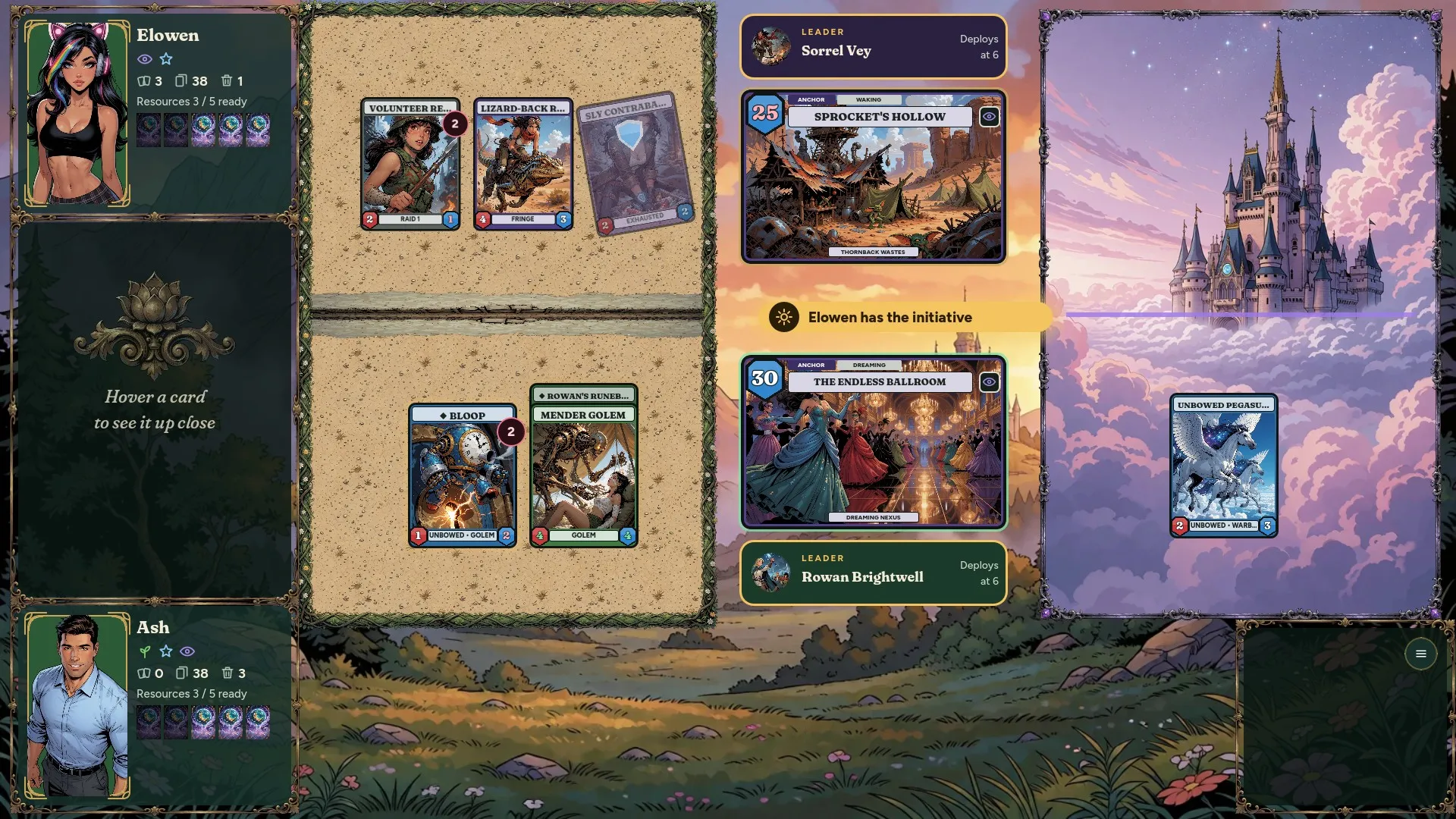
Each side has a leader and an Anchor. Draw six cards (one mulligan allowed), then put two of them face down as resources. Every card you resource is one you won't play, so choose carefully.
Players alternate single actions: play a card by exhausting resources equal to its cost, attack with a ready unit, use an ability, or pass. The phase ends when both players pass in a row.
Claiming the initiative passes for the rest of the phase, but you act first next round. Sometimes going first matters more than one more play.
Draw two, resource a card if you want to, then ready everything. Then the next action phase begins.
The physical world: the University, guilds, courts and laboratories. Its units are students, knights, inventors, mercenaries, golems and armoured war-beasts.
A realm beside our own, shaped by desire, memory and fear, where thoughts become physical facts. Its units are mythical beasts and monsters, shaped by the faction they serve.
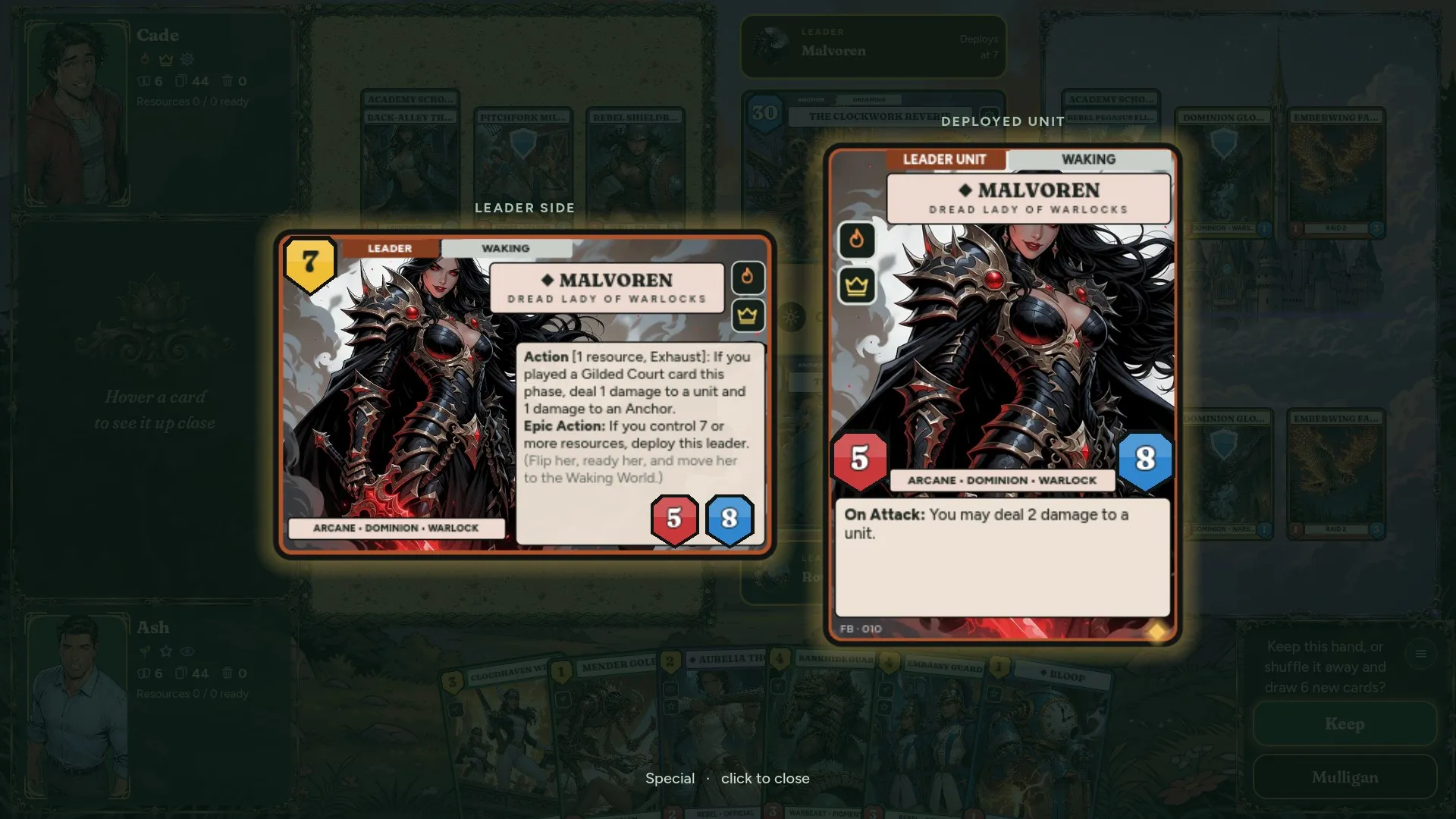
Each faction is a philosophy for fighting in both worlds. Your leader and your Anchor decide which ones your deck plays cheaply.
Big bodies, healing and patience. Outlast the other side.
Thorn ravens, moss stags, bramble wolves
Ramp into resources, then land the biggest threats in the set.
Armored wyverns, iron-scaled dragons
Cheap units, raids and burn. Hit the Anchor early and often.
Flame falcons, fire imps, fang wyverns
Tricks, ambushes and tempo. Never quite where you expect.
Shadow-stalkers, mirror-wraiths, mimics
The heroic alignment. Pairs with any of the four above.
Pegasi, starlit griffons, a phoenix-titan
The villainous alignment, and the faction behind the story's threat.
Nightmare dragons, the shadow-basilisk
Patrons help decide where the game goes next, and higher tiers get early builds.